Protecting and enhancing the landscape
Through our A417 missing link scheme, we want to help keep the traditional landscape of the Cotswolds alive.

Dry stone walling
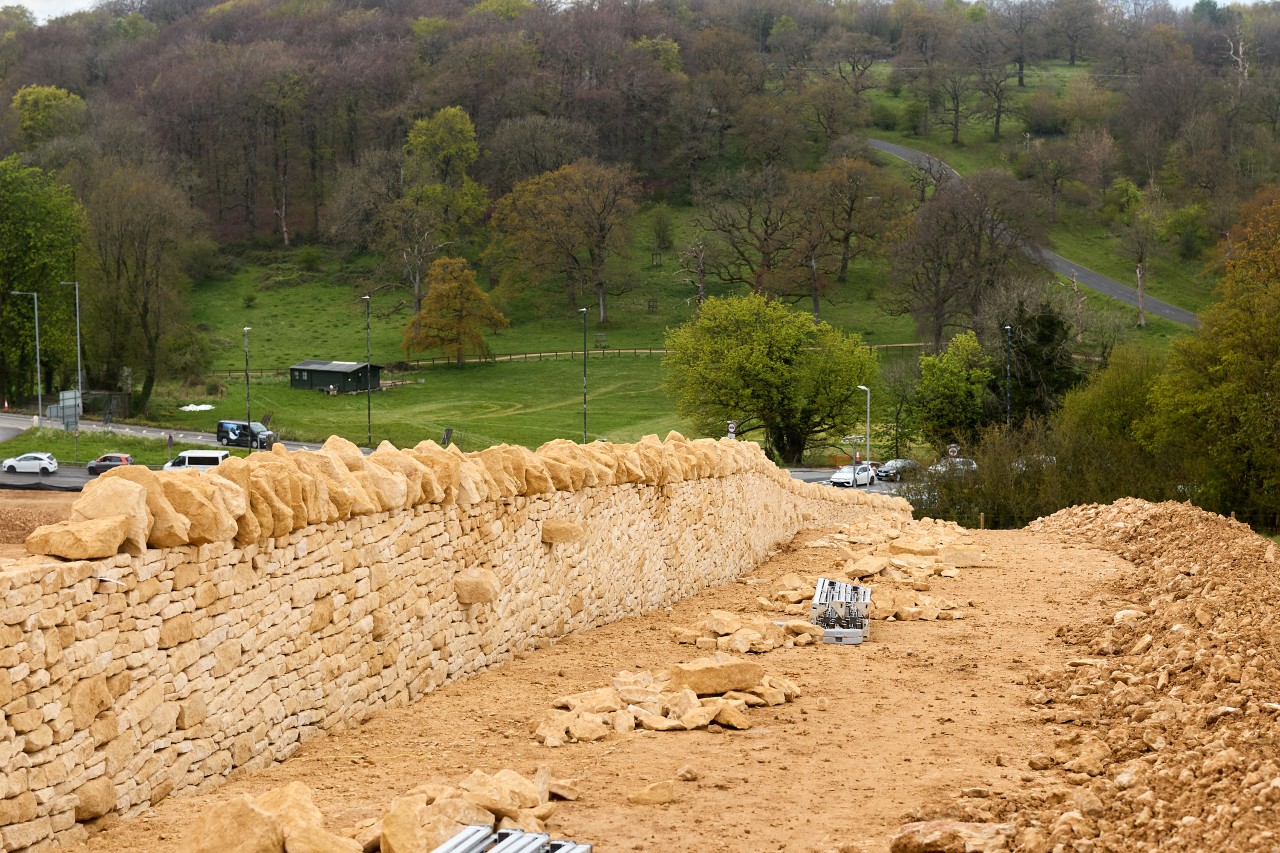
To help our scheme blend into the landscape, we're building 7.5km of dry stone wall.
Most of the wall runs alongside the new A417. Other sections are on parts of the B4070 and at Barrow Wake car park.
We're building walls to traditional standards. To do so, we've employed 12 skilled masons. They learned how to construct Cotswold stone walls from experts at the Dry Stone Walling Association.
Later, we hope to hand down skills to the next generation by taking on an apprentice mason.
Dry stone walls are strong structures, lasting hundreds of years. They're hand-built without any cement or mortar holding them together. As well as creating boundaries, they can also give homes and shelter to wildlife.
Many dry stone walls in our countryside today have stood for over 300 years. Some could date back to Viking settlers - there are dry stone walls in Orkney over 4,000 years old.
Biochar - recycling waste and capturing carbon
Biochar is a form of charcoal produced by burning organic matter at high temperatures with low levels of oxygen.
We've produced five tonnes of biochar from vegetation we removed as part of our work. This has saved 13 tonnes of CO2.
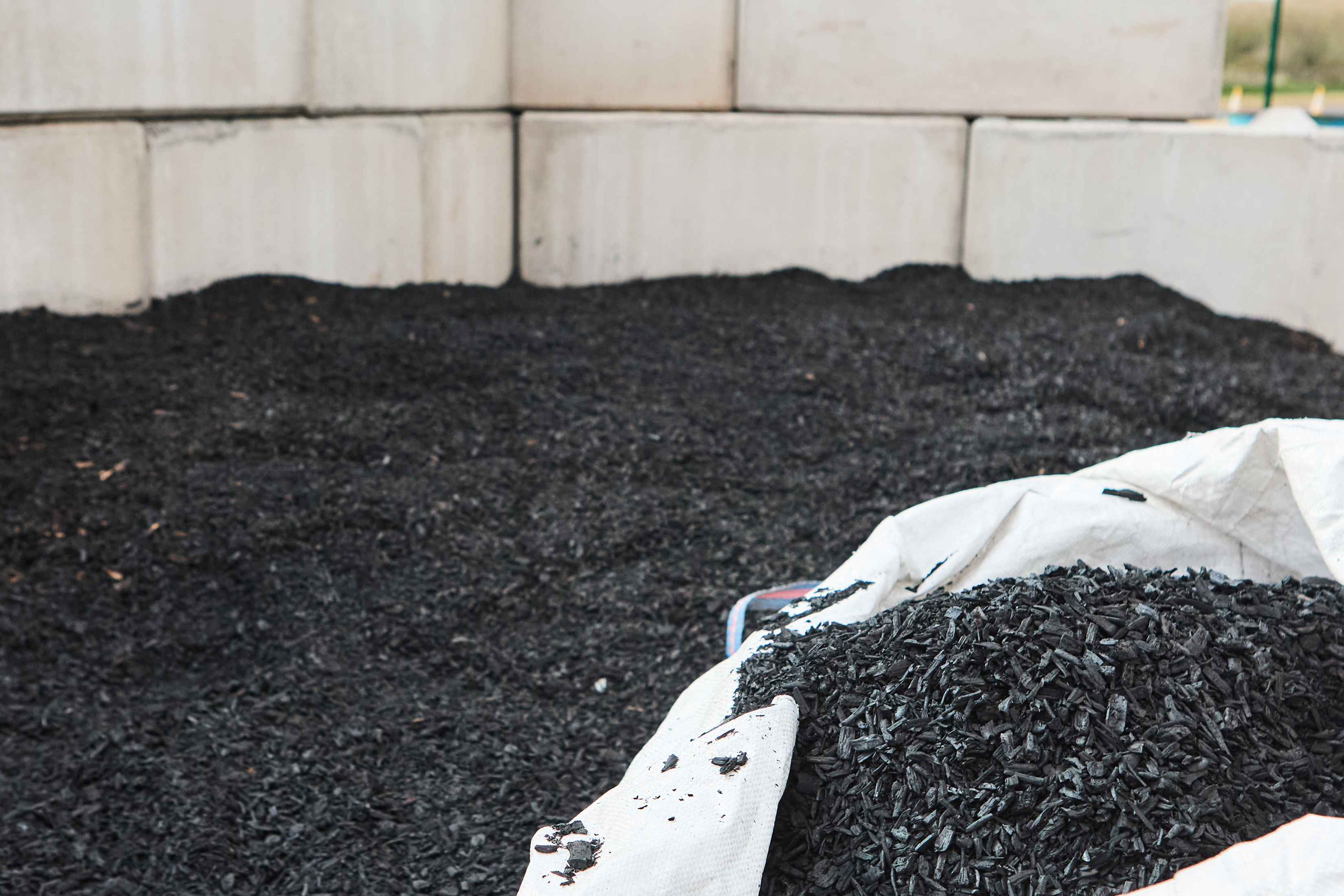
We're now trialling how we can re-use biochar in a number of ways:
Landscaping
We'll mix Biochar into the soil when we plant thousands of new trees. It will help them establish and grow quicker.
In turn, trees will remove more Carbon from the atmosphere.
Gloucestershire Way Bridge
We're using Biochar to help retain water on the bridge deck in dry periods.
This is a more sustainable alternative to the manmade products we'd usually use.
Microplastics
We'll use biochar to remove microplastics from water runoff in the road drainage system.
Capturing benefits for future schemes
When the biochar trial is finished, we'll build a case study detailing benefits, improvements and lessons learnt.
We'll share the results with our supply chain - so we can use the benefits of biochar in future schemes.
The study is co-funded from our Environmental and Wellbeing Designated Fund main A417 contractor, Kier.
Recycling materials
We're recycling excavated site rock on-site using six crusher plants.
We're breaking down the rock to be used as the new base layer for the road.
