Customer journeys
The evaluation examined whether the project achieved its objectives of improving journeys for road users by increasing route capacity, reducing journey times and making journeys more reliable.
Five years after opening, the evidence shows that the project has delivered clear benefits for customers, particularly during periods of high seasonal demand.
Traffic growth
How did traffic volumes change?
Traffic volumes increased following project opening.
Traffic on the A30 is highly seasonal, with substantially higher volumes during the summer tourism period. The evaluation therefore assessed traffic growth separately for neutral months (March to May and September to November, excluding school and public holidays) and summer months (June to August).
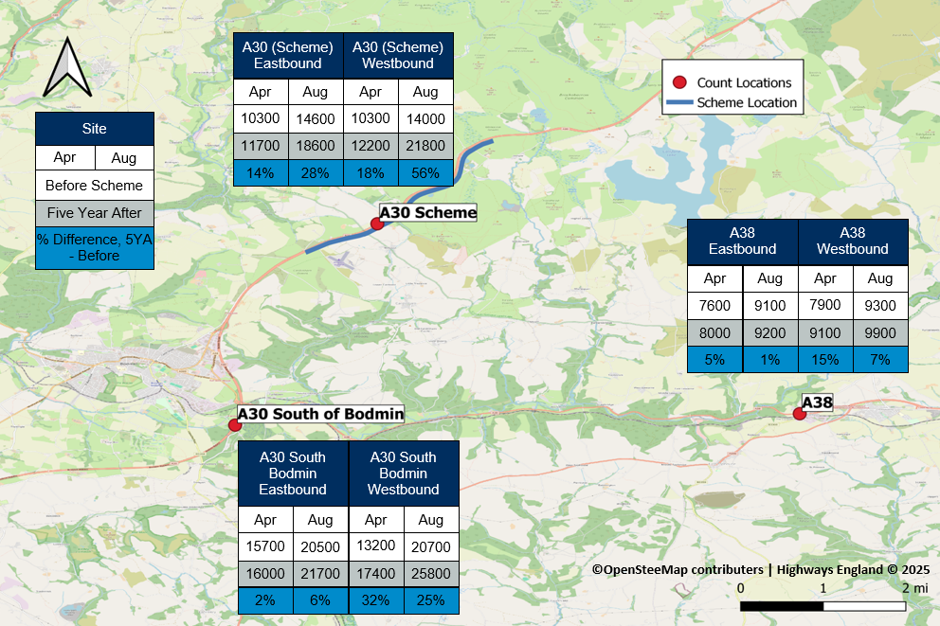
Across the project, traffic increased by around 14–18% during neutral months and 28–56% during summer months, reflecting increased seasonal travel demand. Growth was generally stronger westbound than eastbound, although construction of the nearby A30 Chiverton to Carland Cross improvement project is likely to have influenced eastbound traffic during the evaluation period.
Overall, the results demonstrate that the improved route is accommodating increasing levels of demand while continuing to support seasonal travel.
Average daily traffic before opening and five years after opening
How did traffic growth compare with forecasts?
Traffic growth on the A30 was broadly in line with, or above, forecast levels, particularly during summer weekdays. On the A38, growth was lower than forecast, suggesting less traffic transferred between routes than expected.
Several external factors are likely to have influenced these results, including changes in travel patterns following the COVID-19 pandemic, construction of the nearby A30 Chiverton to Carland Cross project and higher levels of seasonal tourism.
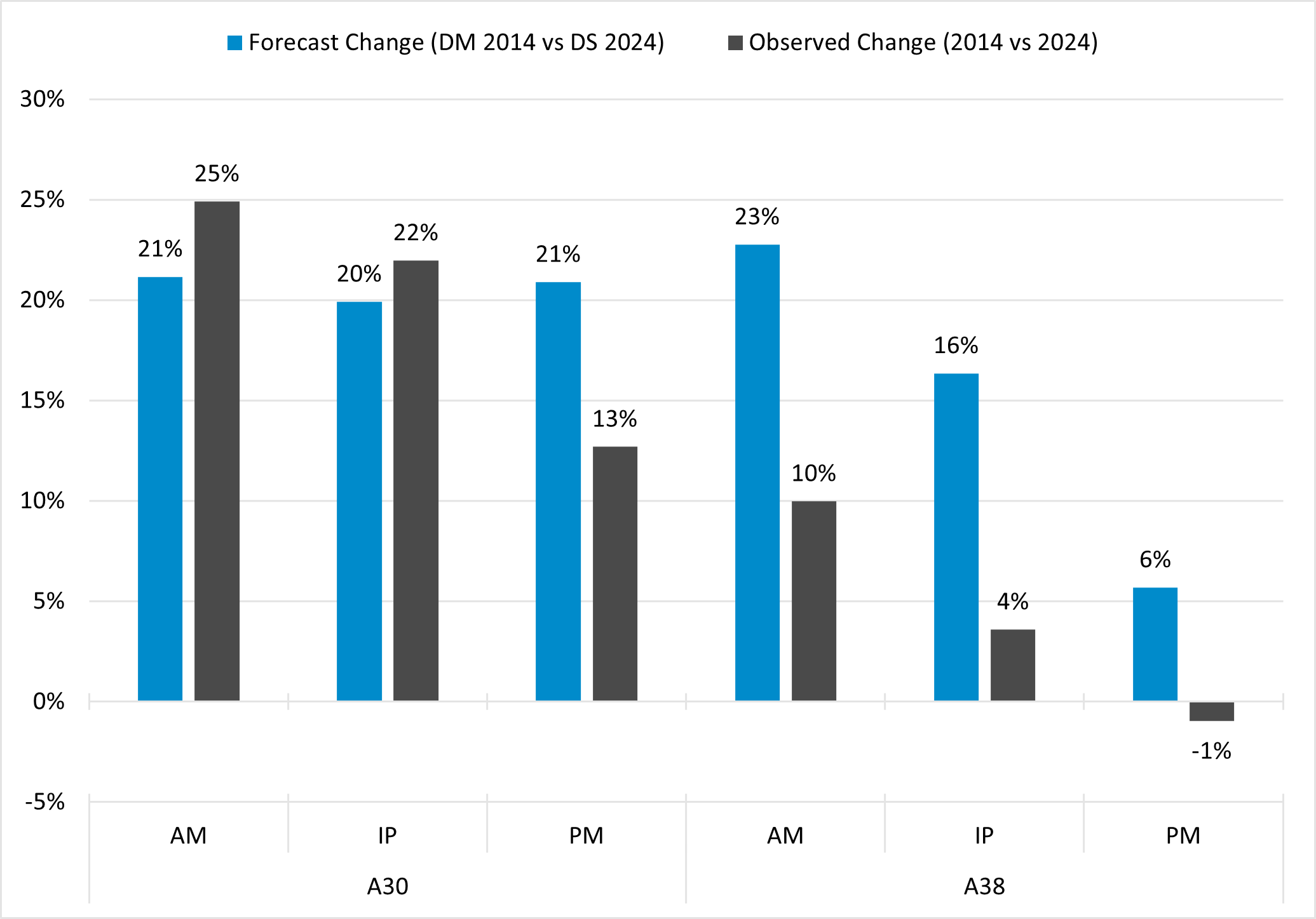
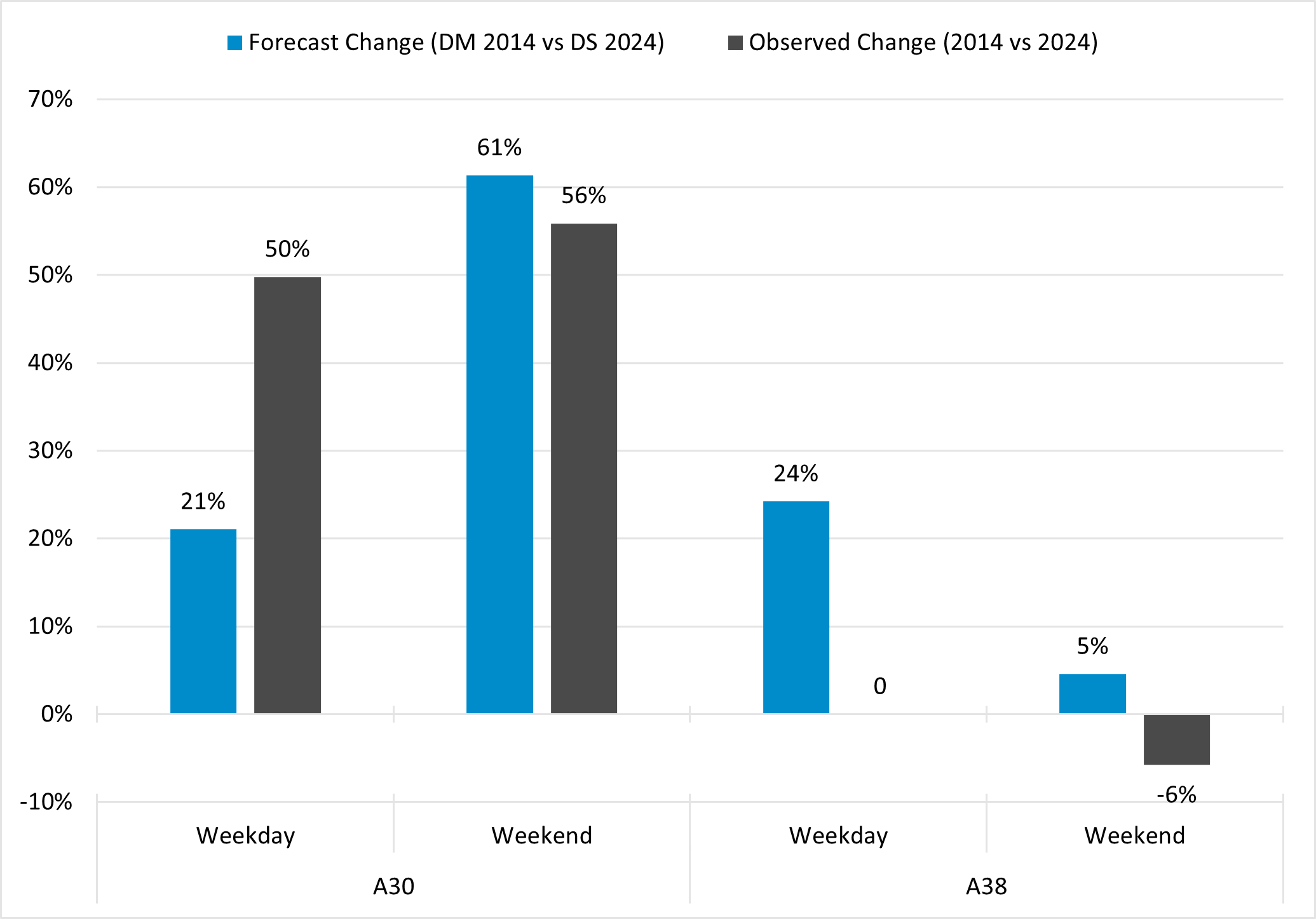
Comparison between observed and forecast traffic growth
A30 during neutral months
Traffic growth on the A30 was within 4% of forecast overall
A30 during summer months
Weekday traffic was 29% above forecast and weekend traffic was broadly in line with expectations - within 5%
A38 during neutral months
Traffic growth on the A38 was 7-13% below forecast throughout the day.
A38 during summer months
No weekday growth observed; 11% below forecast at weekends.
Comparison of forecast and observed traffic flows (% difference) – neutral month (DM - Do Minimum and DS - Do Something scenarios)
Comparison of forecast and observed traffic flows (% difference) – summer month (DM - Do Minimum and DS - Do Something scenarios)
.
Journey time performance
Did the project reduce journey times?
Journey times reduced following project opening, with the greatest benefits seen during busy summer weekends.
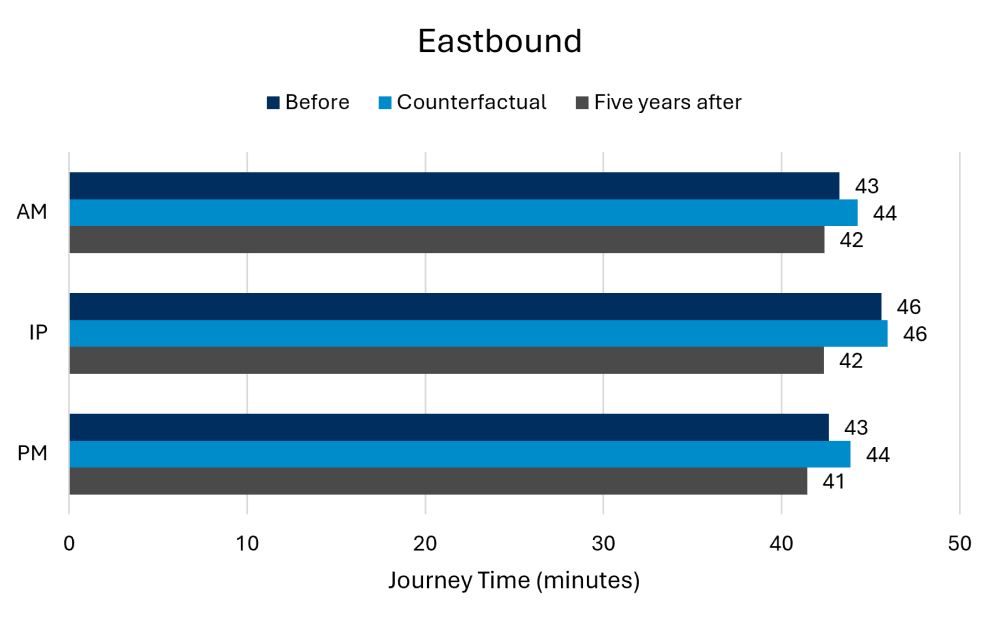
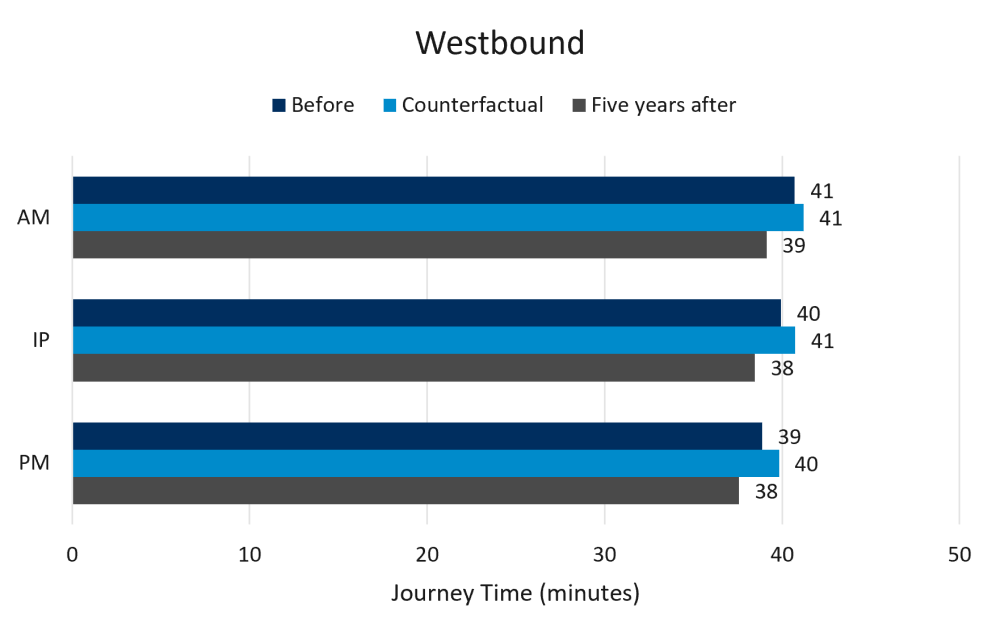
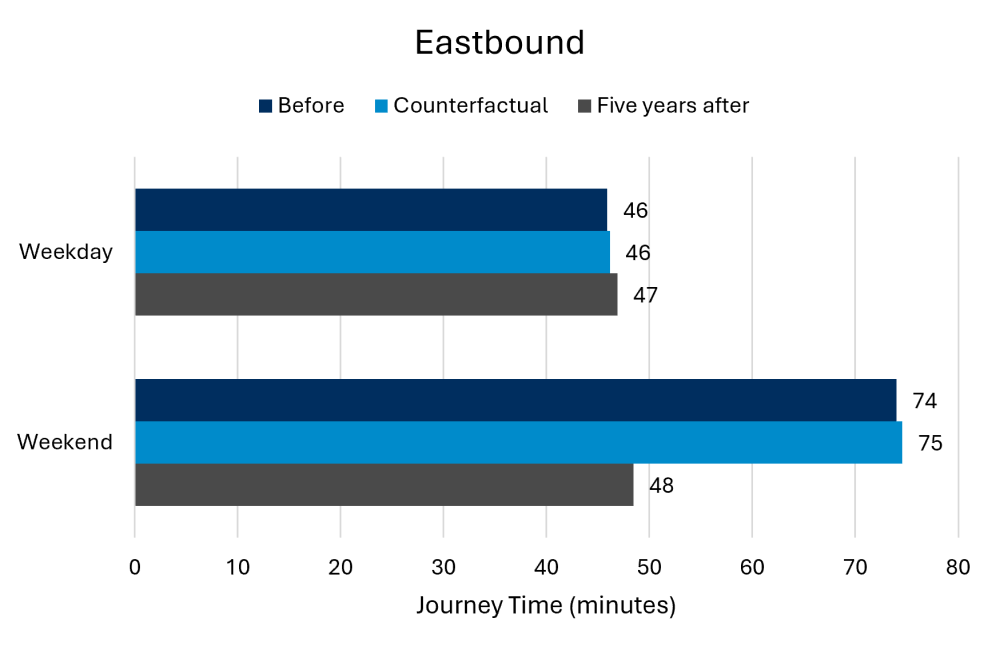
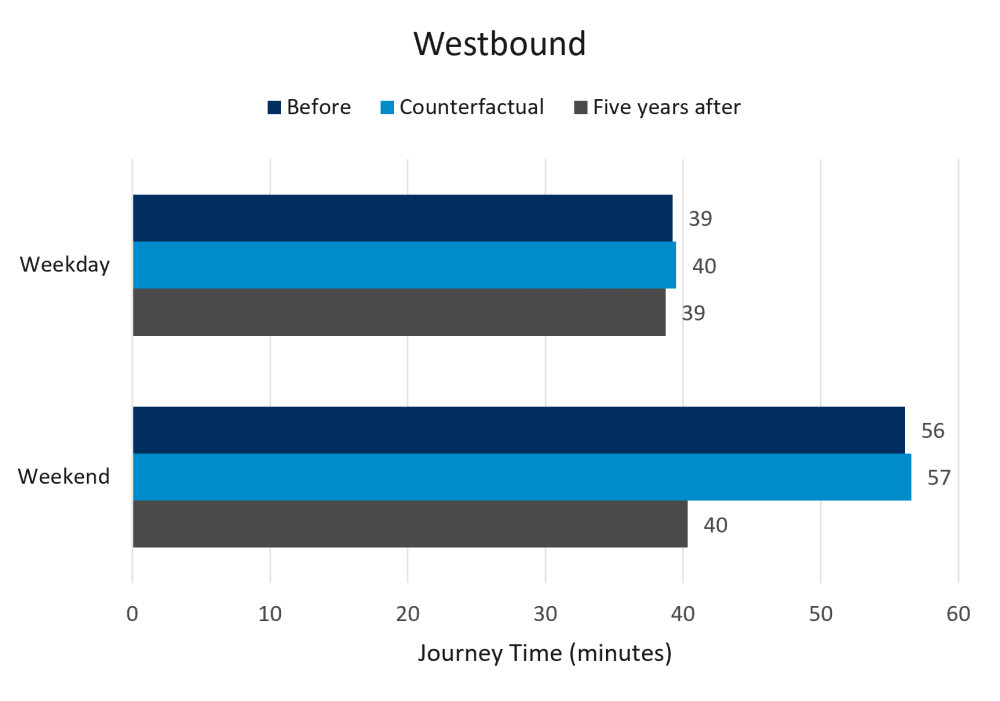
Journey times were compared with conditions before the project opened and a counterfactual scenario representing how journey times would have been expected to change without the project.
Across both directions, journey times were generally shorter than before the project and shorter than would have been expected without the improvements. The greatest reductions occurred during summer weekends, when congestion is typically highest and the additional capacity provided by the project delivers the greatest benefit.
These improvements reflect the additional capacity created by widening the route to dual carriageway, constructing three grade-separated junctions, reducing local accesses and increasing the speed limit to 70 mph.
Comparison of journey times before the project, five years after opening and the counterfactual scenario
On A30 eastbound for a neutral month
On A30 westbound for a neutral month
On A30 eastbound for a summer month
On A30 westbound for a summer month
How did journey time savings compare with expectations?
Journey time savings were slightly lower than forecast overall.
The project delivered journey time savings across the route, although the overall benefits were smaller than forecast during appraisal. Weekend performance closely matched expectations, while weekday improvements were more modest.
- neutral month – journey times were faster than forecast
- summer month - weekend benefits matched expectations, but weekday journey time savings were smaller than forecast
Overall, the evidence shows that the project has delivered meaningful journey time improvements, although the scale of benefit varies depending on seasonal demand.
Journey time reliability
Did the project make journeys more reliable?
Journey time reliability improved following project opening.
Reliable journey times are particularly important for both local users and longer-distance travellers using the A30. The evaluation found that journeys became more consistent after the project opened, with the greatest improvements occurring when traffic demand was highest.
During neutral months, reliability improved in both directions across all time periods. The largest improvements were seen in the slowest journeys, with eastbound journey times improving by up to eight minutes.
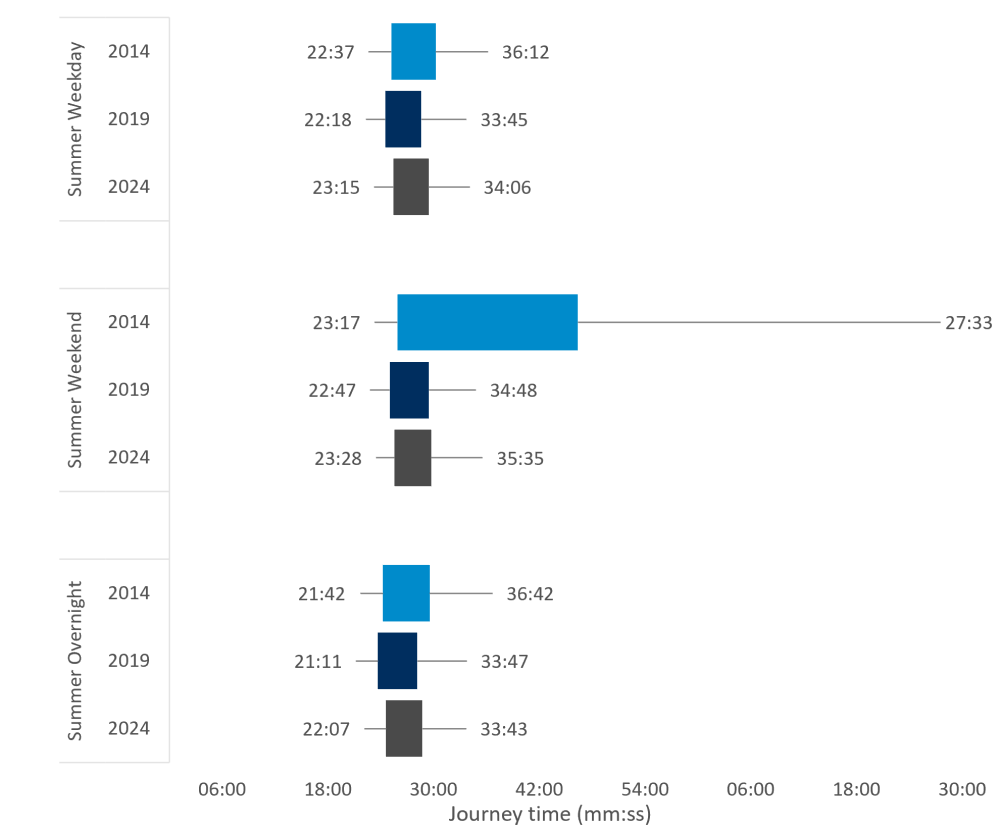
During summer months, reliability improvements were most evident at weekends, when congestion is typically greatest. Weekday and overnight reliability remained broadly similar to conditions before the project opened.
Overall, the evidence demonstrates that the project has made journeys more predictable, particularly during periods of heavy seasonal traffic.
Changes in journey time reliability before and after project opening
On the A30 eastbound for a neutral month
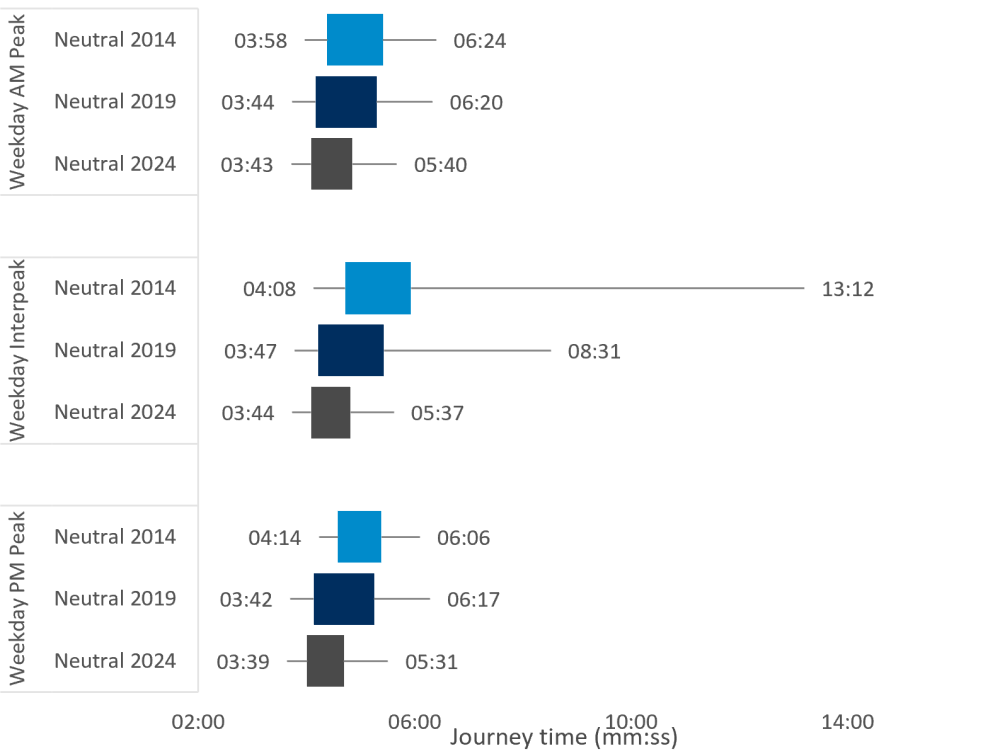
On A30 westbound for a neutral month
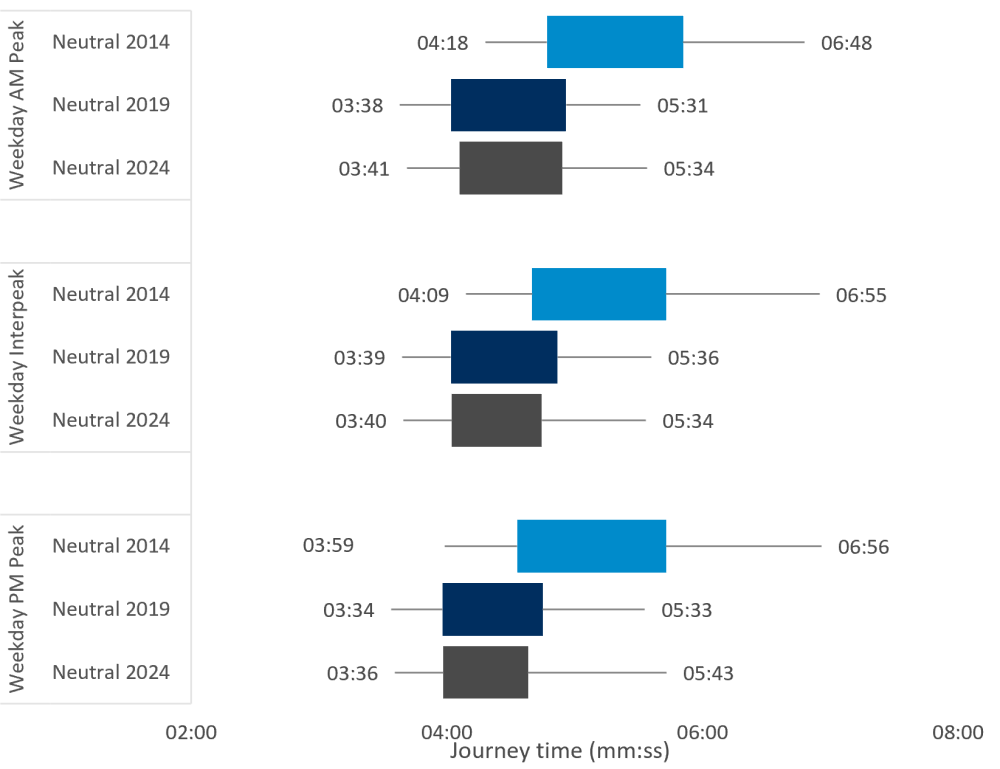
Journey time reliability – A30 westbound - neutral month. Source: TomTom (before: 2014, one year after: 2019, five years after: 2024)
On A30 eastbound for a summer month
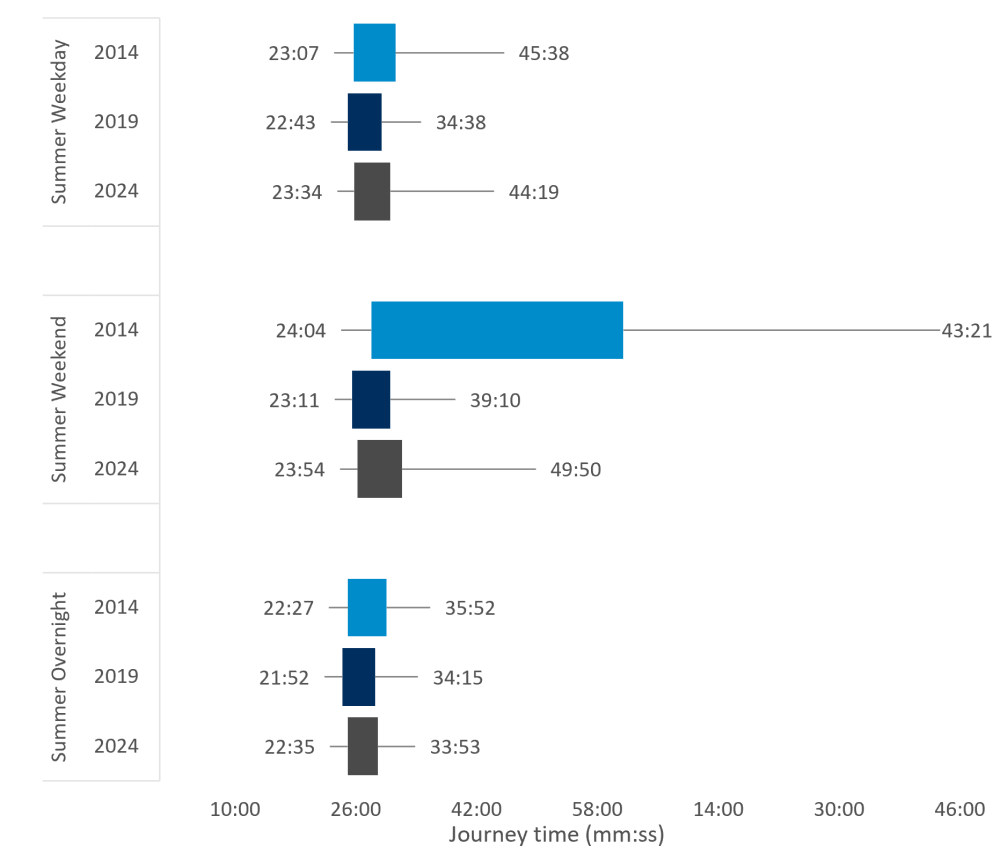
On A30 westbound for a summer month