Customer journeys
The project aimed to improve journeys by providing additional junction capacity to support growth within the Aire Valley, reduce journey times and improve journey time reliability.
Five years after opening, traffic demand has increased across parts of the junction, reflecting continued development in the surrounding area. Journey time and journey reliability outcomes were mixed, with improvements observed on some movements and small increases on others.
Traffic growth
How did traffic volumes change?
The evaluation shows that the junction is supporting increased travel demand associated with continued growth and development in the Aire Valley.
Changes in traffic volumes cannot be attributed solely to the project, as the surrounding highway network has also been influenced by wider development and the opening of the Leeds Skelton Lake motorway services area. However, traffic demand has generally increased across the junction since opening.
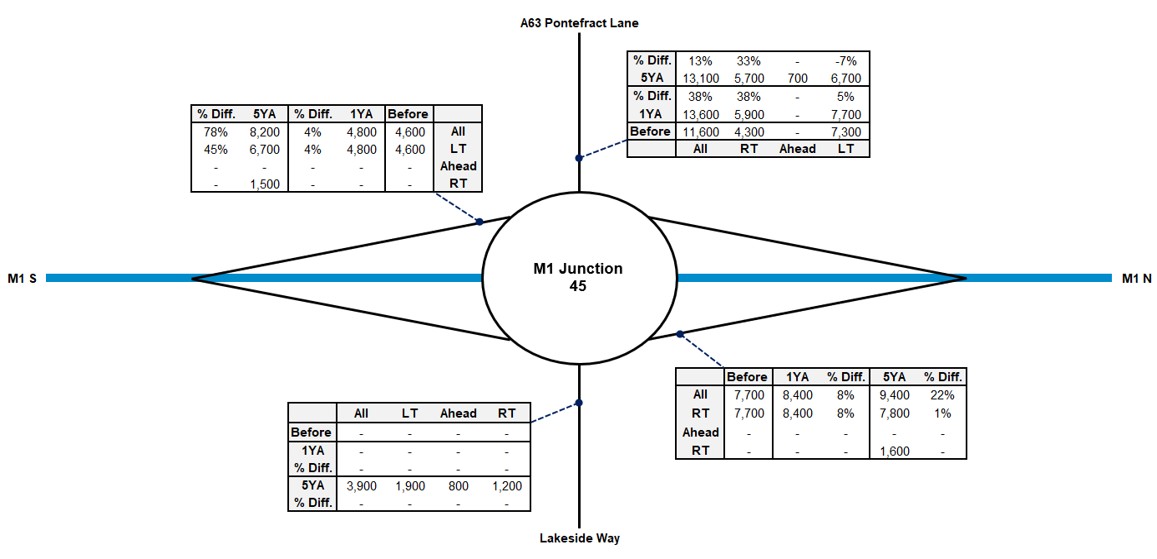
The largest increase was observed on the M1 northbound off-slip, where traffic volumes increased by around 3,600 vehicles (78%) compared with before opening. On the M1 southbound off-slip, traffic flows at five-years after have increased by 1,700 vehicles (22%) compared with before opening.
Traffic volumes on the A63 Pontefract Lane also increased compared to before period, rising by 1,400 vehicles (13%). However, flows were lower than those recorded at one-year after evaluation, indicating a reduction in daily traffic demand on this arm. Detailed results can be found in the figure below.
Figure 1: Change in Average Weekday Traffic (AWT) – total vehicles
How did traffic growth compare with forecasts?
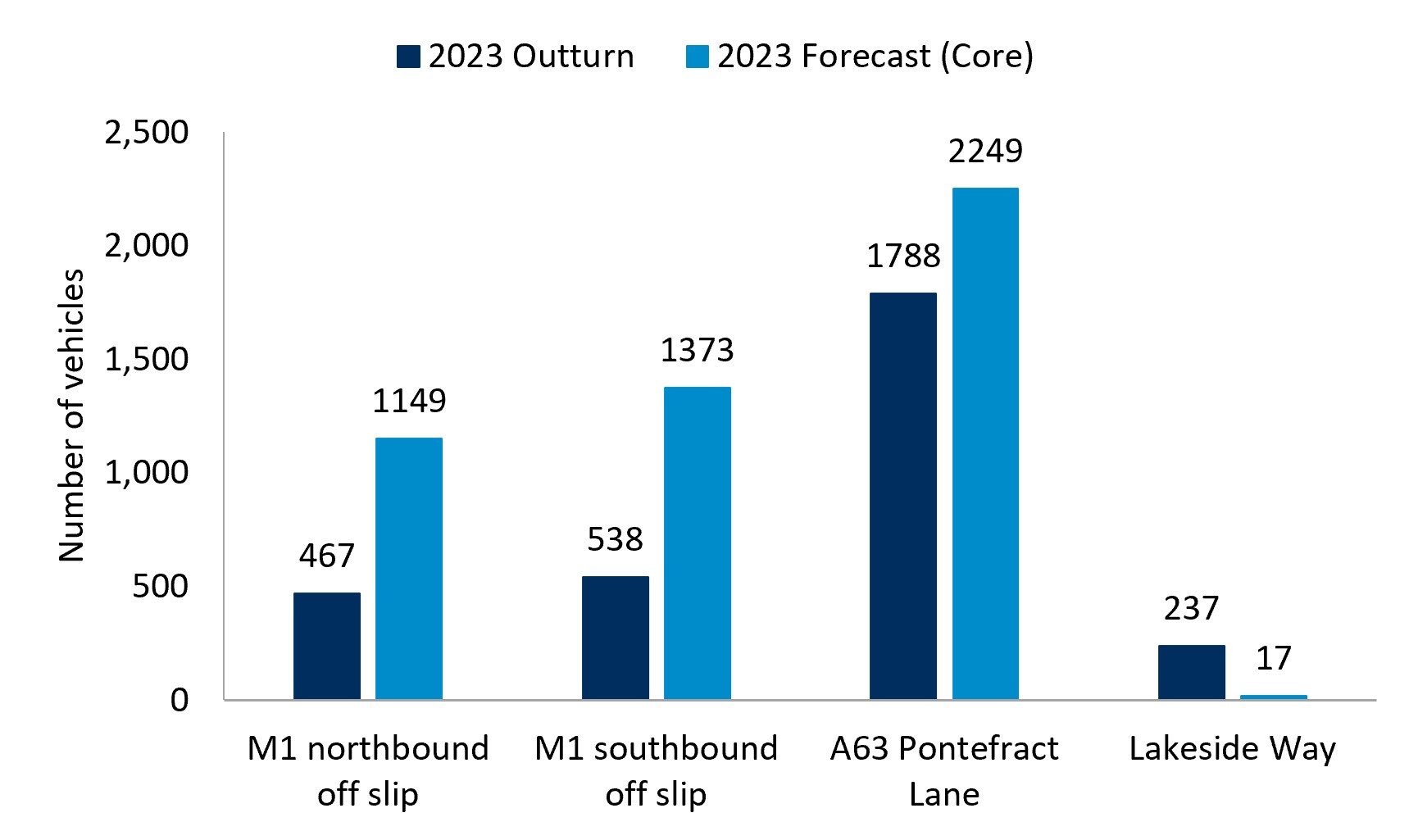
Traffic flows five years after project opening are generally lower than forecast across most movements and peak periods. The main exception was the M1 northbound off-slip, where morning peak hour (8-9am) traffic flows exceeded forecasts by 69% (+356 vehicles).
This is likely due to development within the Leeds City Region Enterprise Zone and the wider Aire Valley area. Traffic flows on Lakeside Way are also substantially higher than forecast during the morning peak hour (+980%) and the evening peak hour (5-6pm) (+1,300%) owing to very low traffic levels forecast for this arm at project appraisal stage. These differences suggest that development south of the junction, including the Skelton Gate development and Leeds Skelton Lake motorway services area, progressed differently from what was assumed when the forecasts were prepared.
Figure 2: Traffic forecasting accuracy – morning peak (8-9am)
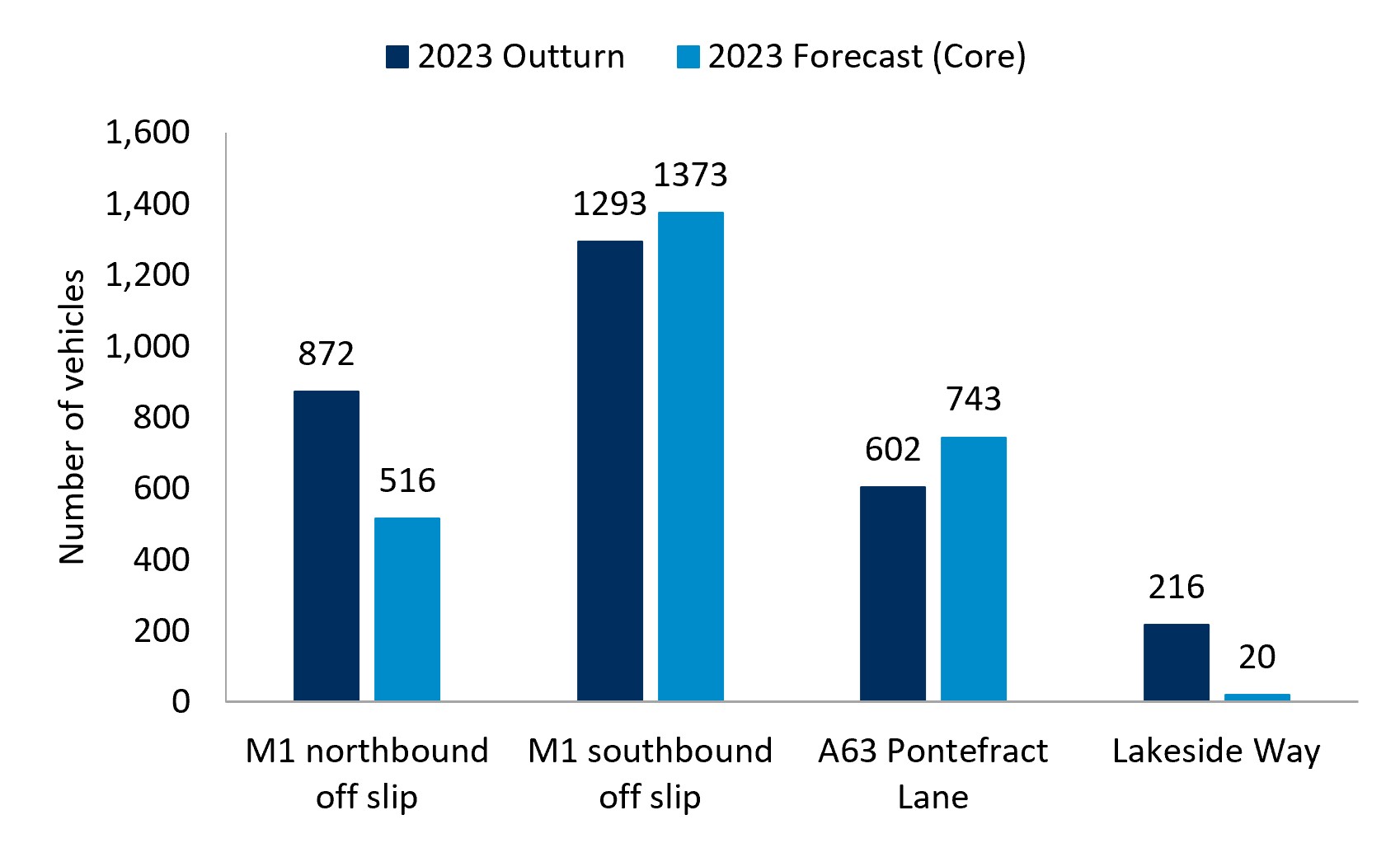
Figure 3: Traffic forecasting accuracy – evening peak (5-6pm)
Journey time performance
Did the project reduce journey times?
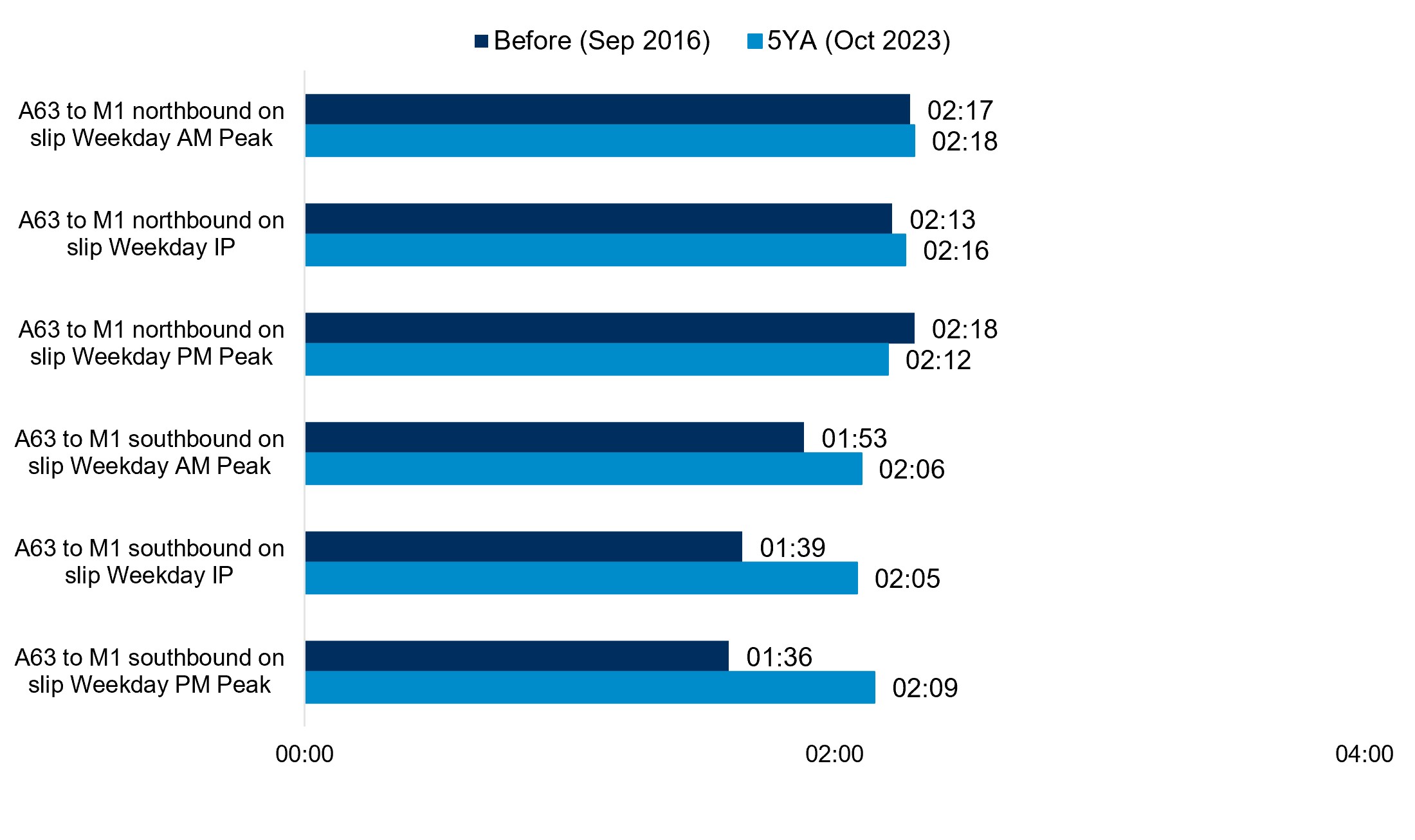
Journey time outcomes were mixed across the junction. Overall, average journey times improved by around 20 seconds during the morning peak hour, while journey times worsened by 40 seconds during the evening peak hour. These overall changes reflect a combination of improvements and increases across individual movements.
Journey times between the M1 northbound off-slip and the A63 Pontefract Lane improved during both morning (8-9am) and evening (5-6pm) peak hours with reductions ranging from seven to 14 seconds since before project opening. An improvement of 20 seconds was also observed between M1 southbound off-slip and the A63 Pontefract Lane during the morning peak (8-9am). However, only minor changes were observed during the evening peak (5-6pm).
During the evening peak hour, journey times between A63 Pontefract Lane and the M1 northbound on-slip improved by six seconds. However, journey times between A63 Pontefract Lane and the M1 southbound on-slip increased by between 13 and 33 seconds across all peak periods. These increases in journey times are as a result of the introduction of traffic signals at Lakeside Way, which was a separate project completed after the M1 J45 improvements
Figure 4: M1 to A63 Pontefract Lane – average observed journey times, morning peak (8-9am)
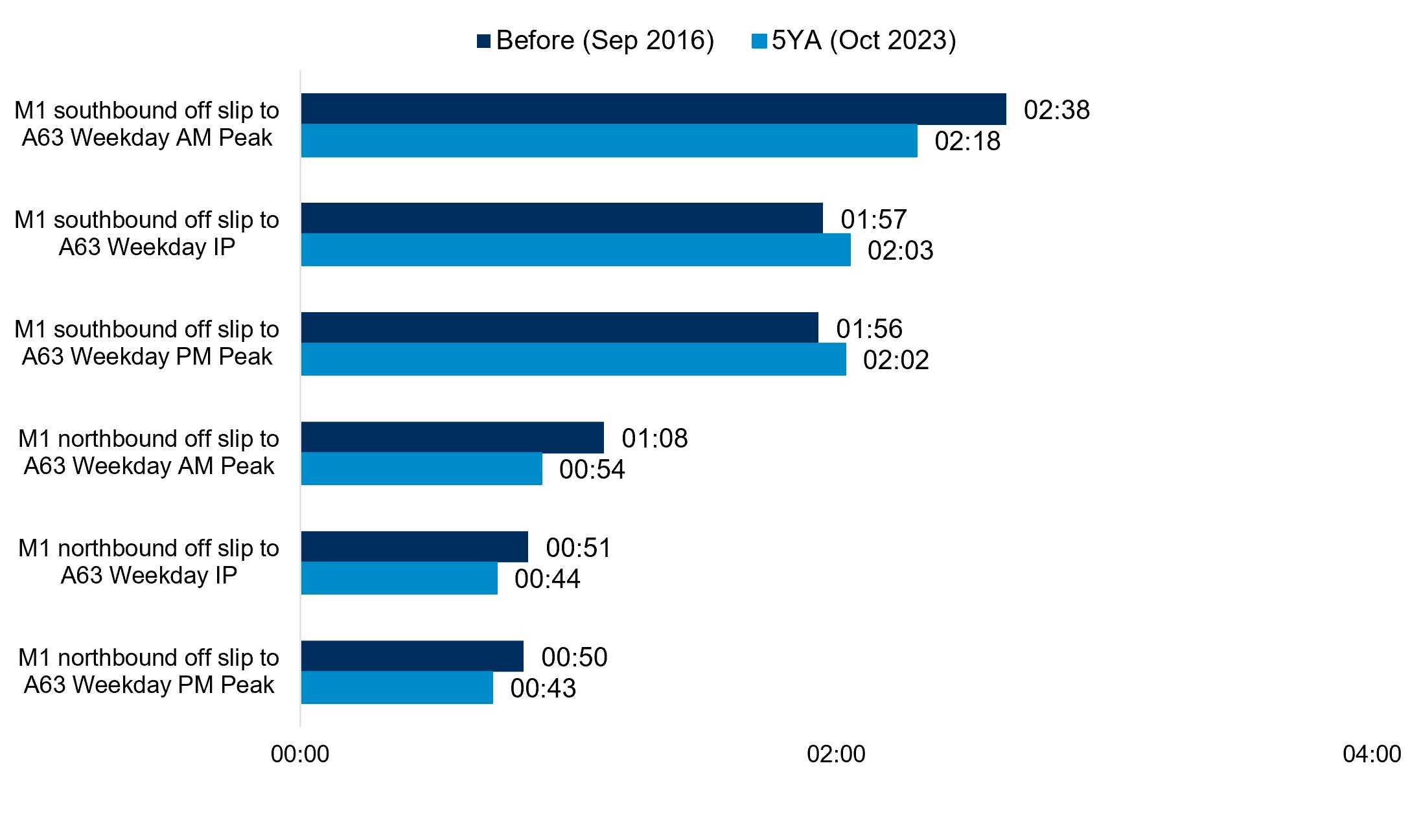
Figure 5: A63 Pontefract Lane to M1 – average observed journey times, PM peak (5-6pm)
How did journey time savings compare with expectations?
A comparison between forecast and observed journey times was not possible due to insufficient information being available from the appraisal stage. However, the project was expected to deliver journey time benefits through increased junction capacity including improvements between M1 southbound off-slip and A63 Pontefract Lane during the morning peak, and between A63 Pontefract Lane and the M1 (northbound and southbound) during the evening peak.
Journey time reliability
Did the project make journeys more reliable?
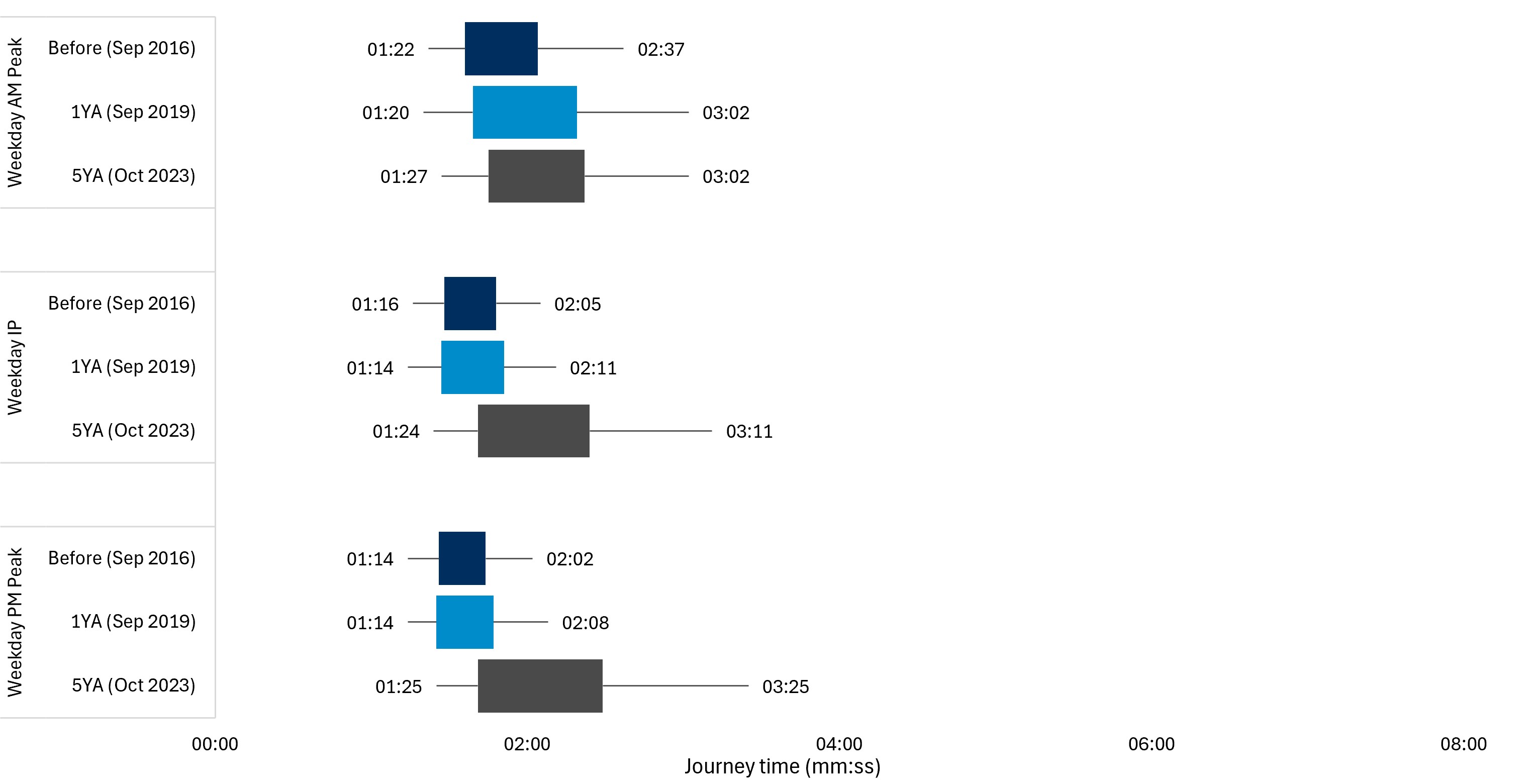
Journey time reliability changed only modestly across the junction overall, although outcomes varied between different movements and times of day.
Journey time reliability for movements between the M1 southbound off-slip and the A63 Pontefract Lane remained largely consistent, with greatest improvement observed during the weekday morning peak hour (8-9am). However, the longest journey times reduced from 5 minutes 44 seconds to 3 minutes 19 seconds, representing an improvement of 2 minutes 25 seconds.
Journey time reliability for movements between the M1 northbound off-slip and A63 Pontefract Lane shows improvement across all peak periods. During the weekday morning peak hour (8-9am) the longest journey times improved by 47 seconds.
Minimal change in journey time reliability was observed for movements between A63 Pontefract Lane and the M1 northbound on-slip. However, reliability for the A63 Pontefract Lane to M1 southbound on-slip movement slightly worsened, particularly during the weekday inter-peak and evening peak periods. A deterioration of 1 minute 6 seconds and 1 minute 23 seconds was observed during the interpeak and evening peak periods respectively. These increases are likely linked to the introduction of traffic signals at Lakeside Way as a part of a separate project.
Figure 6: M1 southbound off slip to A63 Pontefract Lane journey time reliability
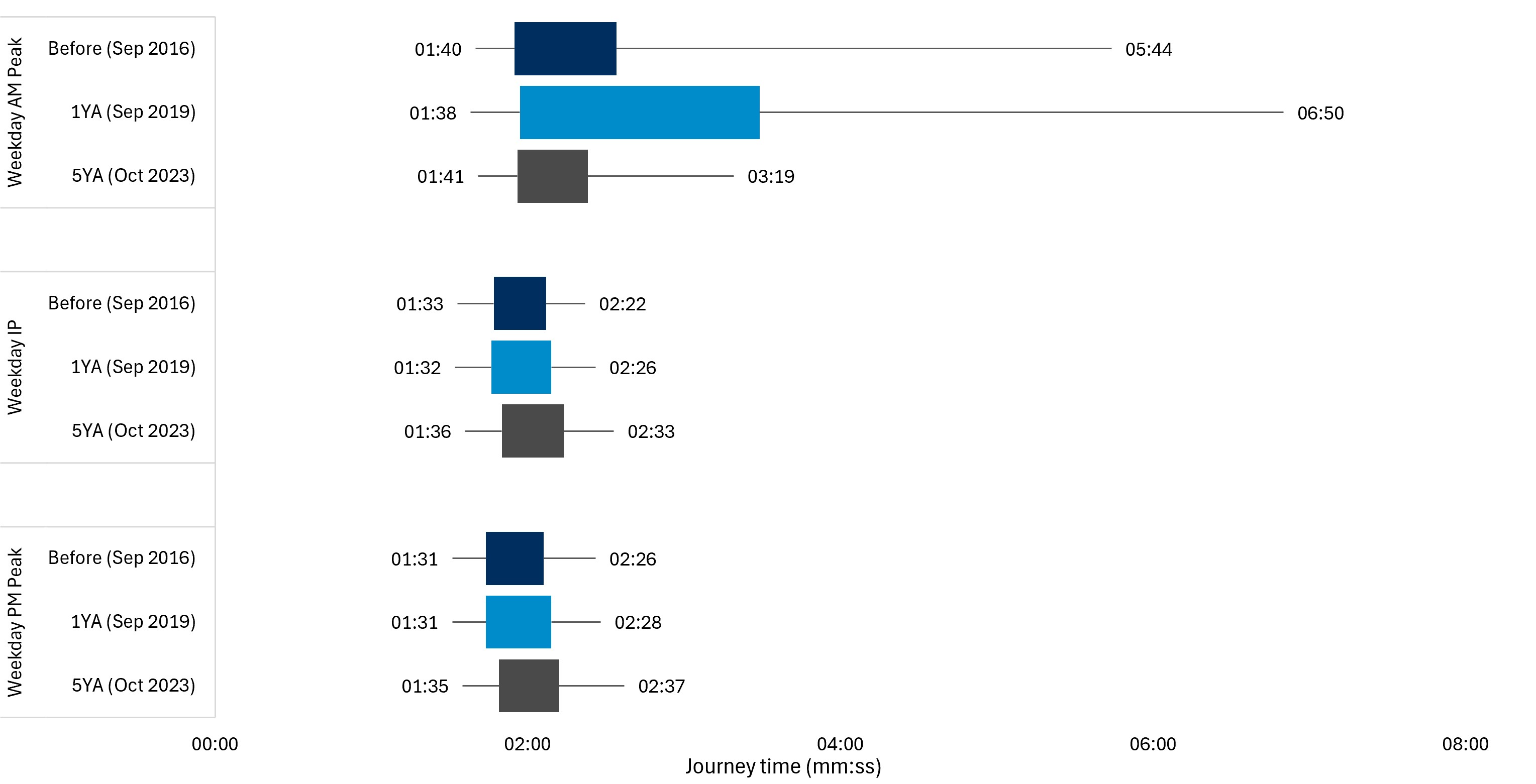
Figure 7: M1 northbound off slip to A63 Pontefract Lane journey time reliability
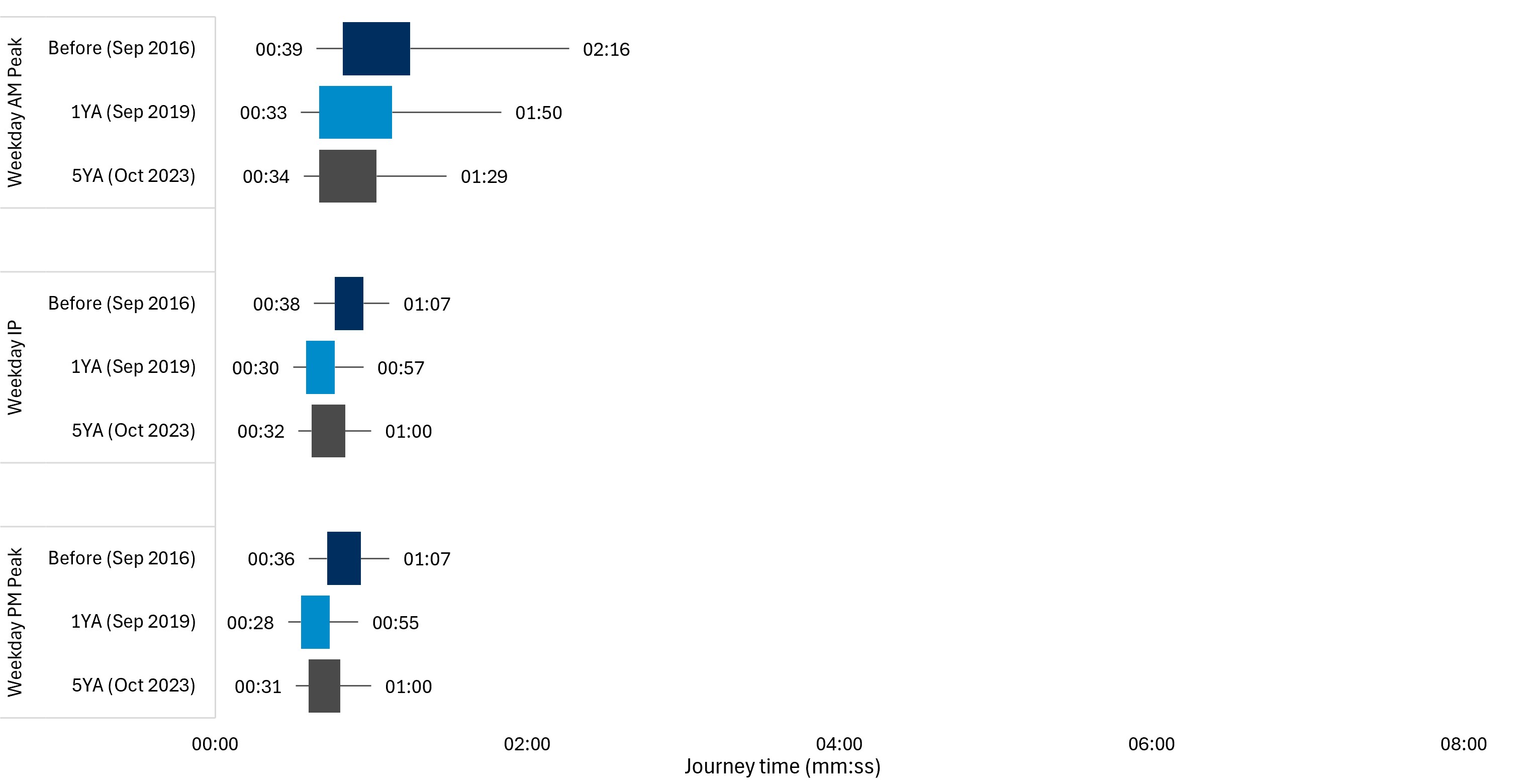
Figure 8: A63 Pontefract Lane to M1 northbound journey time reliability
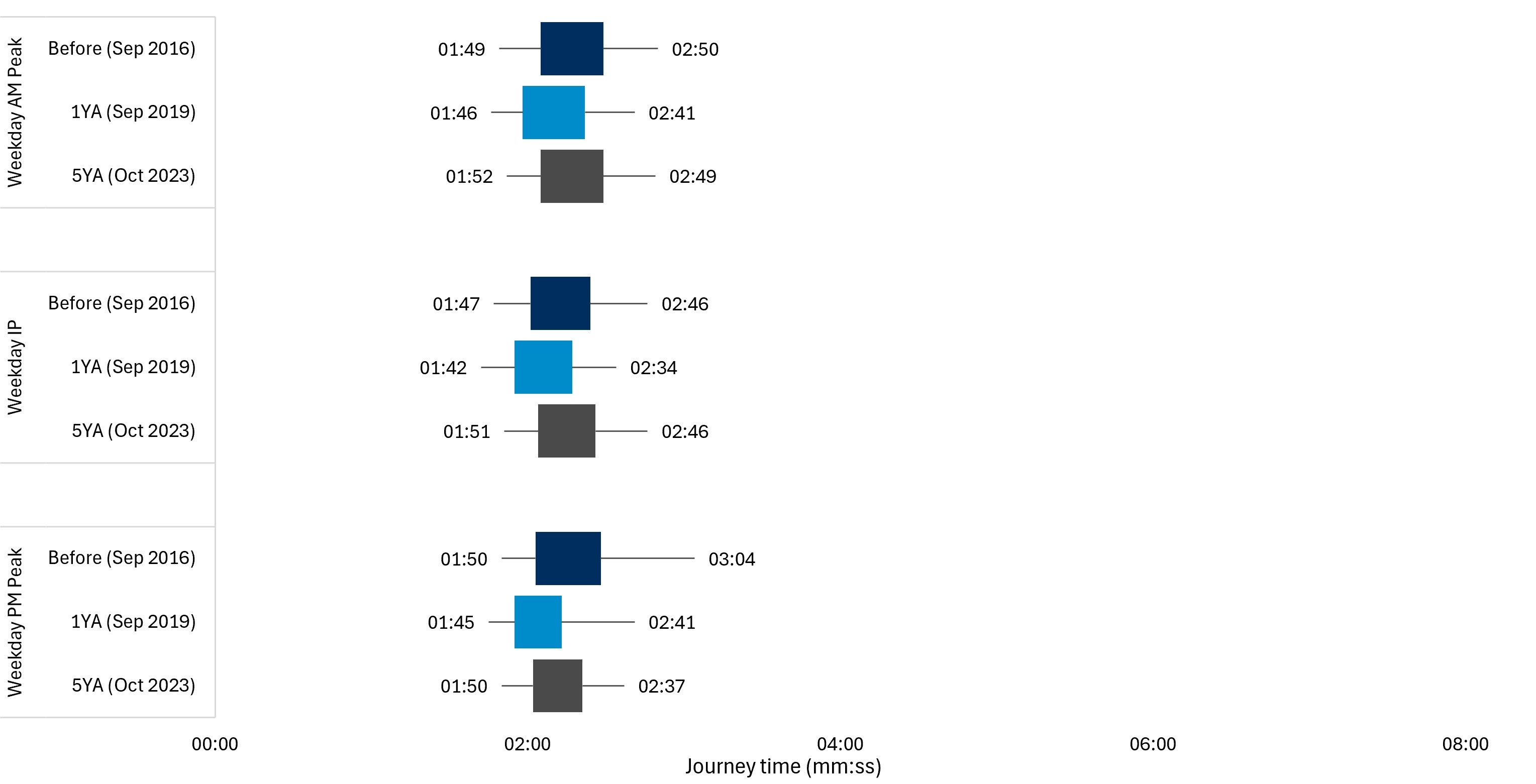
Figure 9: A63 Pontefract Lane to M1 southbound journey time reliability