Station Road, Braughing
Single-lane traffic management is in place while we work to bring this structure back to full safety.

Share this article
Location: Station Road, Braughing, Hertfordshire
Status: Seeking permission for works
History
Braughing Station was a stop along the old Buntingford to St Margarets branch line and opened in 1863. Trains operated on the line in the 1920s through to Liverpool Street. The bridge carries traffic along Station Road through the village of Braughing, just metres away from the old station.
The line and the adjacent station were closed as part of the Beeching cuts in 1964. The station has been restored, and classic signage is still in place. It is now a private property.
Architecturally, it is a typical example of bridge constructed in the late-19th century and it is recorded by the Hertfordshire Historic Environment Record as a non-designated heritage asset.
Structural condition
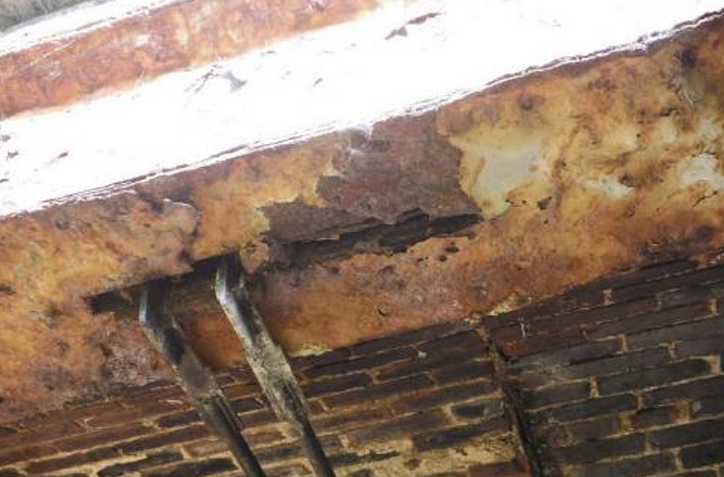
The bridge carries an important local two-way road. However, the south-east beam at the end of the bridge failed the relevant structural assessments in November 2025 and is currently rated at 0-tonne load capacity, requiring urgent attention.
Other beams and structural elements of the bridge are currently assessed as serviceable. While not in optimal condition, they are performing adequately and do not present an immediate safety concern.
How are we ensuring public safety?
Traffic must be prevented from loading the failed beam. In February 2026, with the agreement of Hertfordshire County Council, we installed single-way traffic lights and speed limit on the bridge.
What is the plan?
Options for the structure were discussed with the Parish Council and at our Stakeholder Advisory Forum (SAF) in May 2026. The forum is made up of key stakeholders with an interest in active travel, heritage and ecology. They help us to review major work proposals, ensuring our schemes consider community feedback and any opportunities to repurpose and reuse structures. Find out more about how we work with stakeholders.
After taking all viewpoints and solutions into consideration, including the responsible use of public funds, the most viable option is to strengthen the bridge.
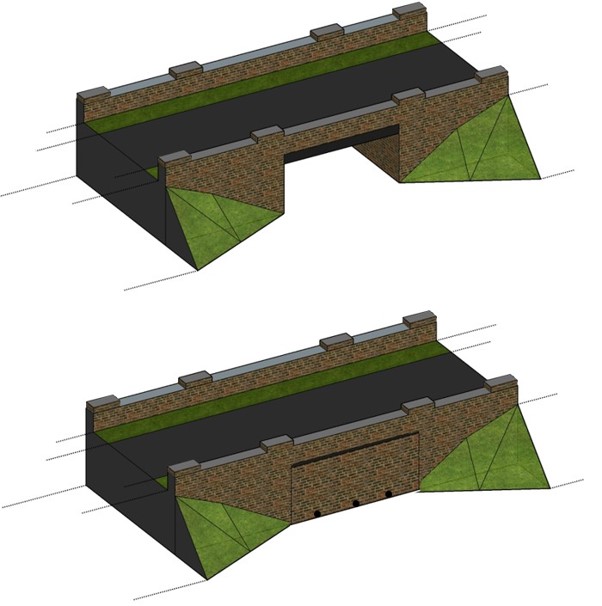
Our plan is to vertically infill under the bridge with foamed concrete to support the bridge and take the traffic loading. The vertical outer face of the infill concrete will be faced in a suitable brick to match as closely and sympathetically as possible to the existing structure.
As well as providing the required structural support, a key benefit of using foamed concrete is that it can be removed from inside the structure later, if needed.
What stage is the project at?
August 2026 update: Our proposal has been reviewed by the Department for Transport as part of the Historical Railways Estate (HRE) governance process. Following confirmation that the appropriate review and approvals process has been completed, we're preparing to submit a planning application to the local planning authority.
Our aim is to start work on the structure in spring 2027. This timescale reflects the necessary processes the HRE team must undertake, including technical and ecological assessments, discussions, approvals, and the design and delivery of the construction works.
In the meantime, the traffic management will remain in place to ensure the safety of the public.
We will continue to update local stakeholders on the progress of our plans.
Celebrating its history
Once the structural works have been completed, we will look to engage with local stakeholders on ideas to help celebrate and commemorate the bridge’s history.
