M3 junction 9
We're working closely with archaeological specialists to make sure important remains near M3 junction 9 are identified, protected and recorded before and during construction.

Winchester has a long and varied history, with evidence of human activity stretching from early prehistory right through to the 20th century. Archaeological remains in the area include settlements, farming activities, burial sites, ritual features, transport routes, industrial areas and military sites.
Pre-construction investigations
For the past nine years, we’ve worked closely with the city archaeologist to make sure archaeology has been considered at every stage of the project.
Before construction began, we carried out a range of surveys to understand what archaeological remains might be present and how best to protect them.
Desk-based assessment
We reviewed existing information such as historic maps, aerial photographs, LiDAR (light detection and radar) imagery and previous survey reports. This included looking again at excavation records from archaeological work carried out before the M3 was built in the 1970s and 1980s.
Geophysical surveys
We used specialist surveying techniques such as magnetometry to identify possible archaeological features below ground without disturbing them. This helped us decide where further investigation might be needed.
Trial trenching evaluations
In certain areas, machine-excavated trenches were dug to investigate features identified during the surveys and confirm what was present beneath the surface.
Next steps
Together, these investigations showed that people lived in and used this landscape from prehistoric times right through to the modern day. A programme of archaeological work was designed to make sure these remains could be carefully excavated and recorded before construction began.
Archaeological mitigation
Strip, map and sample excavation
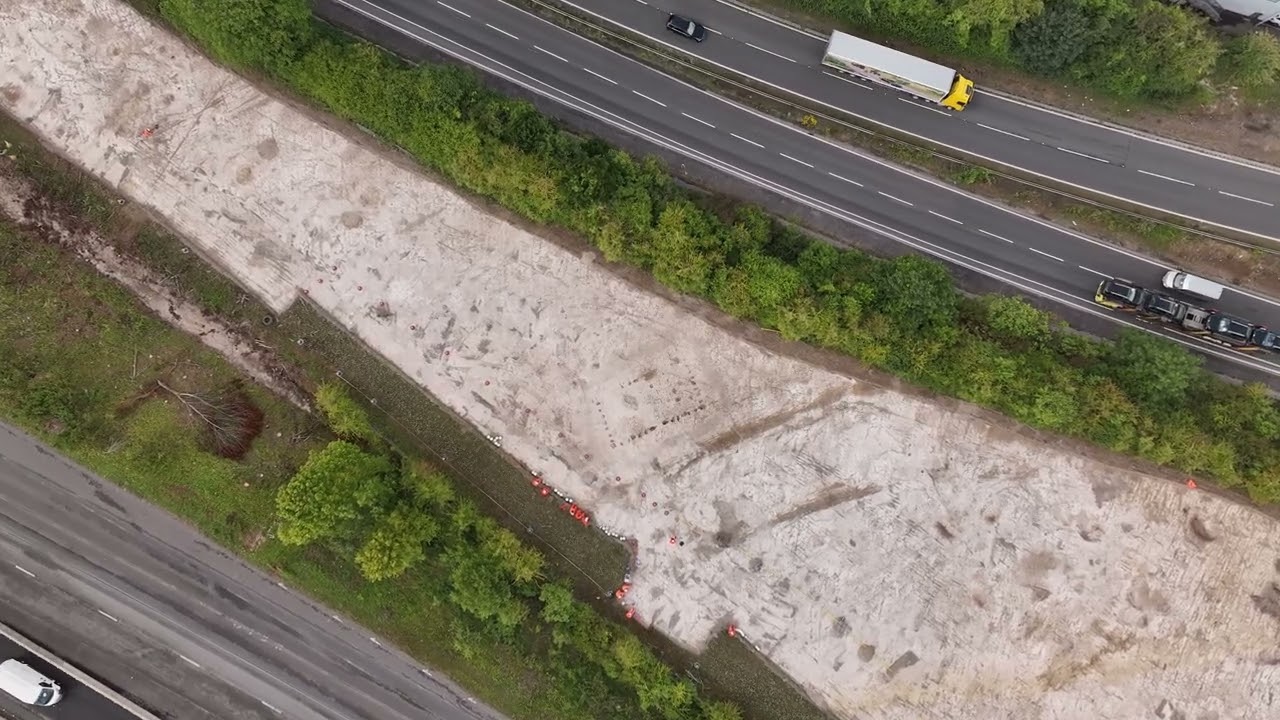
A large-scale strip, map and sample excavation has been in progress at the M3 junction 9 since the end of 2024. This provides an exciting opportunity to revisit features identified during the 1970s/80s excavations and uncover new finds and features which can tell us more about the lives of people living in this part of Winchester in the past.
This work also ensures that the archaeological features are recorded and the finds preserved for future generations.
Modal with carousel

Surveying features during excavation

Surveying and excavating

Excavating a feature
Environmental archaeology
Borehole samples will also be taken from selected locations. These can contain a variety of environmental remains such as pollen, plant remains, wood and charcoal which can help us reconstruct past environments.
By studying the soils and sediments in these samples, specialists can build a picture of how the landscape has changed over time, including the history of the River Itchen, and understand how people adapted to those changes.
What has been found?
A range of exciting discoveries have been made during the archaeological works so far which include remains from the Neolithic, Bronze Age, Iron Age, Anglo-Saxon and post-medieval periods.
Prehistoric ring ditch
One of the most important discoveries at the M3 junction 9 is a large prehistoric ring ditch. First excavated in the 1970s, this circular ditch once surrounded a chalk mound containing Bronze Age burials and cremations.
The new excavations are providing us with the opportunity to revisit this feature and learn more about past activity in the landscape surrounding it. This includes new Bronze Age burials which have been found on other parts of the site.
Modern scientific techniques will also be used to understand more about this fascinating monument.
Find out more in the video below:

Iron Age and Roman settlement
We've also been able to revisit the Iron Age and Roman settlement located south of the ring ditch. Expanding the area of excavation around it has revealed new evidence from this period including round houses, burials and rubbish pits. We even found some dog and horse burials.

Anglo-Saxon longhouse
One of the most surprising discoveries at the M3 junction 9 site is an Anglo-Saxon longhouse. This is the only evidence of Anglo-Saxon activity found here and is unusual as it lies well away from the main Anglo-Saxon settlement at Winchester.


Modal with carousel
What next?
Post-excavation analysis
Once all the archaeological features have been excavated and recorded we can start to piece together the story of the site’s history. This phase of work is known as the ‘post-excavation phase’.
Any objects and human remains found during the excavations will be carefully cleaned and studied by experts. Soil samples from the site will also be examined to find palaeoenvironmental remains, such as pollen and plant remains, that help us understand what the landscape was like in the past. Some of this material can also be used for scientific tests such as radiocarbon dating which is used to find out how old things are.
Sharing our findings
We’ll continue to share updates and discoveries as the post excavation work gets underway. Follow our website and social media channels to stay up to date and find out what we uncover next.
Working with local communities
Winchester University
First year archaeology students from the University of Winchester visited the M3 junction 9 to see archaeologists in action on a working construction site and learn all about careers in archaeology.

The M3 project goes back to school
Colleagues of the project including our brilliant archaeology experts spent action packed days earlier this year at several primary schools delivering an immersive archaeology workshop.
We transformed the school halls into a mini museums and dig sites, complete with a series of hands on, curiosity fuelled activities. The children rotated through:
- Roman armour dress up – trying on gear just like ancient soldiers.
- Roman coin investigations – studying real designs and creating their very own masterpieces.
- PPE dress up – stepping into the shoes (and safety gear!) of our team.
- sandbox excavations – uncovering 'finds' discovered on the M3 site.
- pottery exploration – learning how experts date pottery, then crafting their own pots to take home.
- a finds table – featuring artefacts including horns, pottery and rope for the children to observe and handle.
Throughout the afternoons, we brought Winchester’s Hidden History to life - sharing incredible stories about the archaeology lying just beneath our feet. The children were fascinated to learn that exciting discoveries can be made almost anywhere, even where they walk every day.
Most importantly, we inspired them by showing that archaeology isn’t just about the past, it’s a real career full of adventure, discovery, and the thrill of preserving history for future generations to enjoy in museums.


Find out more
Find out more about archaeological discoveries in Winchester and the surrounding area, including those made before the M3 was originally built, on the HeritageGateway website.
Many artefacts are also on display at Winchester City Museum and Westgate Museum.
